


Responding to news that police in Georgia violently dispersed an overwhelmingly peaceful demonstration in Tbilisi, where protestors rallied against the controversial “foreign influence” bill, Denis Krivosheev, Amnesty International’s Deputy Director for Eastern Europe and Central Asia, said:
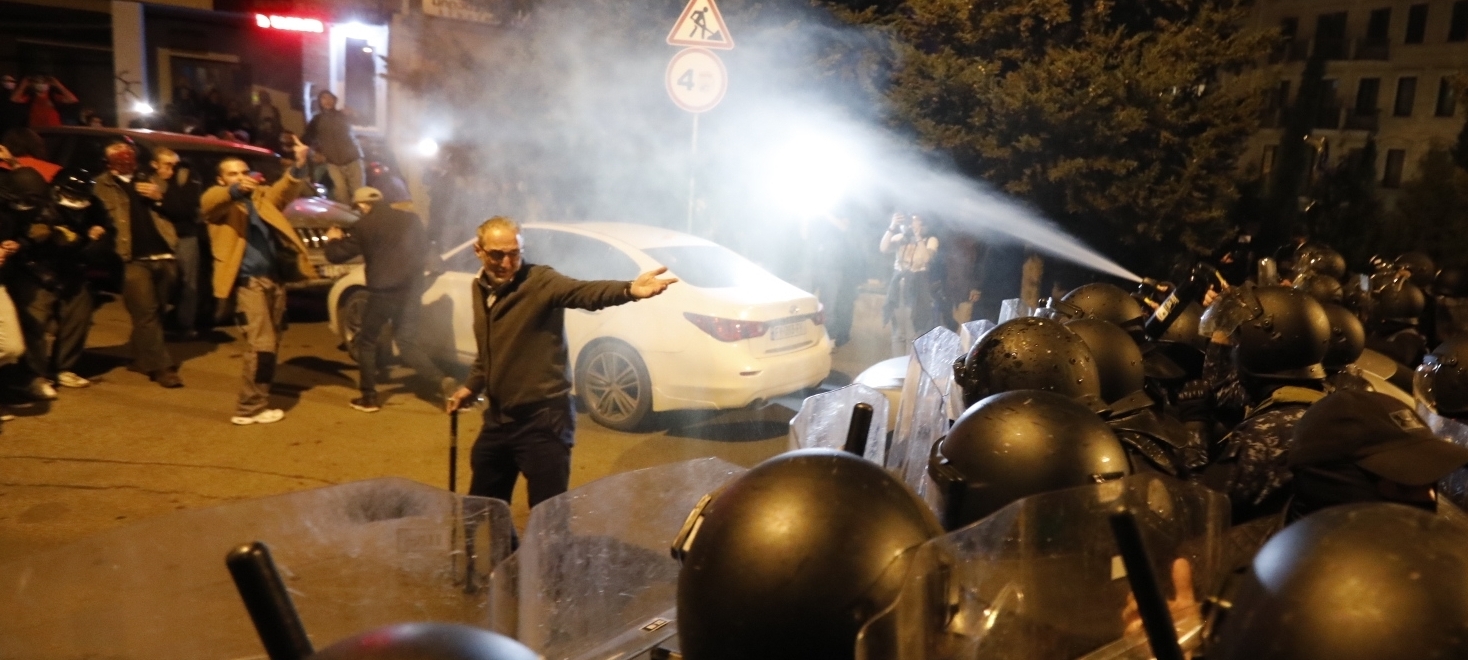
“What we witnessed in Tbilisi yesterday was a brutal retribution against people for exercising their right to protest peacefully. The authorities act as if it is their prerogative to decide when people can or cannot protest and deploy riot police to disperse and arbitrarily arrest the protestors using violence. On several occasions, police were seen chasing and hitting fleeing protestors with truncheons, surrounding and beating them mercilessly while on the ground.”
“Instead of facilitating a peaceful demonstration, the police have carried out what appears to be a punishment operation. We urge a swift, impartial and thorough investigation into all instances of force used, and accountability for those found responsible of unlawful use of force. We also remind the Georgian authorities that the right to peaceful assembly is fundamental, and the government of Georgia must comply with the country’s international human rights obligations.
Instead of facilitating a peaceful demonstration, the police have carried out what appears to be a punishment operation
Denis Krivosheev, Amnesty International’s Deputy Director for Eastern Europe and Central Asia
“Amnesty International also reiterates its call to drop the bill “On transparency of foreign influence,” which seeks to restrict the right to freedom of association and is clearly intended to smear and restrict independent civil society organizations and curb their activities.”
Background
Tensions between peaceful protesters and police, which progressed throughout the day on 16 April 2024, ended with law enforcement violently dispersing demonstrators by using unnecessary force without warning. Police officials were seen using tear gas and administering beatings, including against journalists.
At least two injuries have so far been reported: an employee of the Interior Ministry and a cameraman from Rustavi 2 TV, who inhaled tear gas. According to officials, police detained 11 people, citing violations of public order. Secretary General of the opposition party LELO, Irakli Kupradze, is reported to be among those detained.
Amid the unrest, Parliament delayed voting on the “On transparency of foreign influence” bill, rescheduling the consideration for 17 April 2024.