

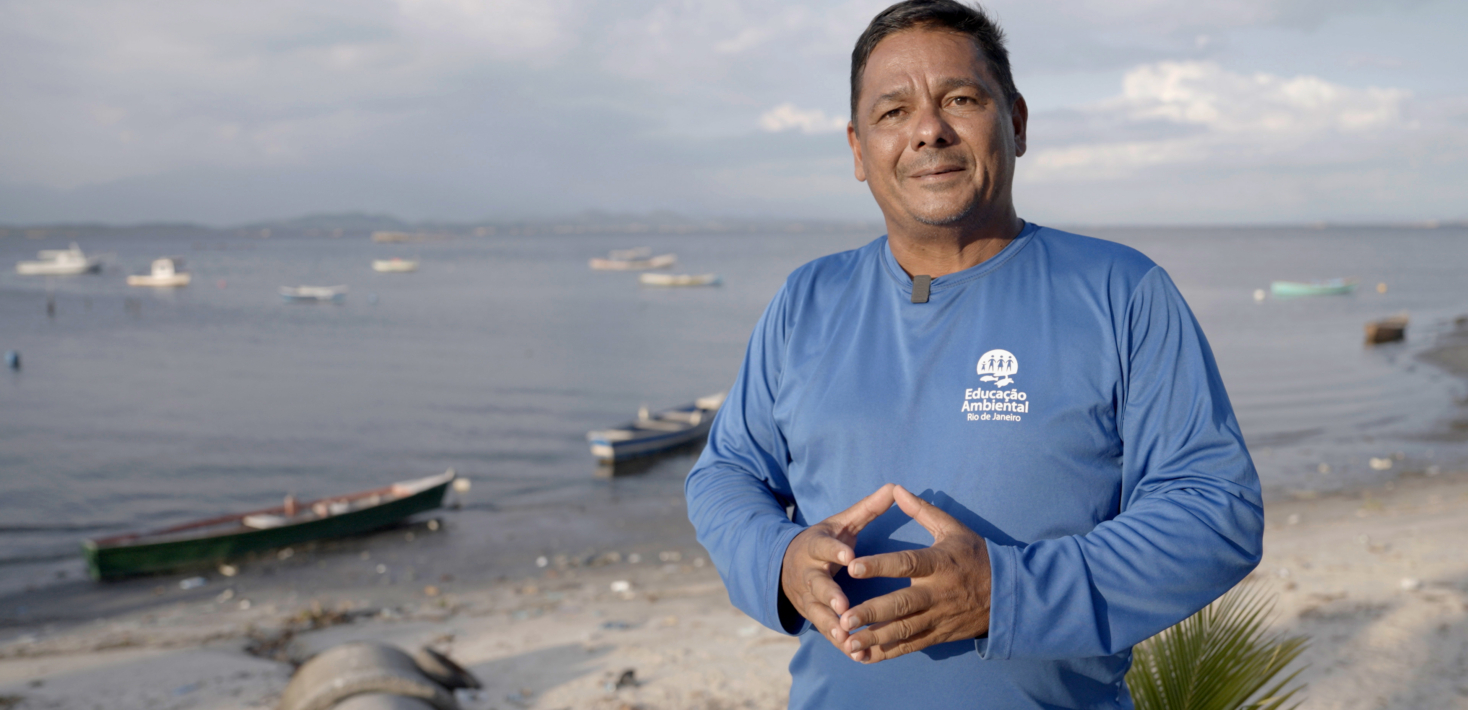


Meet Alexandre Anderson – a water defender from Brazil
For Alexandre Anderson de Souza and other artisanal fishers, Guanabara Bay in Rio de Janeiro, Brazil, is a source of livelihood, identity and culture.
But pollution from multiple sources, including the oil and gas industry, industrial waste and untreated sewage has turned the bay into a sacrifice zone. Artisanal fishers face contaminated water, declining fish stocks, eroded mangrove, shrinking fishing areas and increasingly dangerous routes, while polluters profit without paying for the environmental degradation they cause.
Alexandre co-founded Associação Homens e Mulheres do Mar (Association of Men and Women of the Sea – AHOMAR), a network of artisanal fishers that has spent nearly two decades defending the bay and their traditional way of life from the impacts of oil and gas infrastructure. Several environmental human rights defenders (EHRDs) told Amnesty International that they feared for their safety, some facing intimidation and harassment.
Among them, Alexandre has been repeatedly threatened and has survived several attempts on his life. Here, he shares his story:
My name is Alexandre Anderson. I am 54 years old; I am a fisherman and I have been living and working in Guanabara Bay since 1997.
Artisanal fishing is not just a means of subsistence. It is our culture, a way of life.
In the 1990s, we felt that something was already changing in Guanabara Bay. Our elders say that when the first refinery started to work, the bay suffered a lot. There was a lot of oil around because it was next to two rivers and these rivers were used to illegally discharge sewage.
I’m not the oldest fisherman in the region, but the elders say that fish used to be abundant here, and they disappeared. It wasn’t a natural phenomenon, it was a phenomenon of man’s influence, an industrial phenomenon. Oil is not synonymous with wealth, it’s not synonymous with growth, it’s synonymous with destruction.
“No one warned us”
I remember that I used to sail, on a rudimentary boat… always built by us. With the disappearance of fish, we had to go further into the sea, and I had to buy an engine for the boat. The fish kept moving away, because the shore was increasingly polluted.
The fishermen were then forced to leave the region or change profession. Some say that this is environmental racism. Some say that this is a ‘sacrifice zone’. There has been no public communication… no consultation in our community. No one warned us. When we came to know about the industry, the infrastructure was already being built in the middle of the sea, or in the middle of a beach. (With growing industry presence) there was violence, physical violence, even personal violence against some leaders. Unfortunately, at dawn on 18 January 2000, there was a big (oil) leak in the water caused by an oil pipeline. This whole area was contaminated, and we were pushed away from artisanal fishing. We were pushed to leave everything that we understand – cultural, religious, traditional – and even leaving the place where we were raised, where we were born.
“We are successful in what we do because we work with the truth”
We revolted against everything that was happening and started to look for actions we could take. In 2003 we started to search for answers as a group, and we founded the Associação Homens e Mulheres do Mar (Association of Men and Women of the Sea – AHOMAR).
Soon after in 2009, through our monitoring efforts, we were able to remove two oil sites which were illegally occupying our space and contaminating our region. We are successful in what we do because we work with the truth and we do not work alone. We’re supported by many well-known organizations, such as Amnesty International and observers have even accompanied us to these sites.
In 2009, we lost a treasurer and our founder was shot. In 2012, we had two more deaths of artisanal fishers monitoring the bay. But we are resilient, history will remember us as a resistance and as heroes, and the oil giants will be remembered as destroyers and polluters.
… History will remember us as a resistance and as heroes,
Alexandre Anderson
… and the oil giants will be remembered as destroyers and polluters.
The killings came after sustained threats against Alexandre Anderson de Souza and other members of AHOMAR. The threats relate to complaints the group have made against the construction of a gas pipeline in the bay, and environmental damage that is threatening artisanal fishers’ livelihoods.
On 22 May 2009, the treasurer of AHOMAR, Paulo César dos Santos Souza, was beaten and shot in the head in front of his wife and children; the following year Márcio Amaro, a founding member of the association, was also shot dead in his house.
Both cases remain unresolved.
“We are resilient, but we didn’t ask for this”
Every little boat here, every artisanal fisher who still bravely wakes up early or arrives late from the sea, is an act of resistance. As long as there are boats like these, they cannot take over Guanabara Bay. Protecting artisanal fishing territories means ensuring that rivers and seas continue to be a source of life and dignity, and not just profit.
Guanabara Bay represents everything. It’s our livelihood and our struggle is against large companies. Sometimes we don’t have any more space to fish, it’s something we always tell them. We are not after money, we only want what is ours, we just want to fish in Guanabara Bay, it’s our right and they are taking away our rights.
We are resilient, but we didn’t ask for this. We must resist or we die. We transformed our tears into struggle. This revolt, this sadness that is part of our history, (but) we transformed it into action.
We transformed our tears into struggle.
This revolt, this sadness that is part of our history, (but) we transformed it into action.
Alexandre Anderson
The struggle in Guanabara Bay reflects a reality observed all over the world: fossil fuel and other extractive projects benefit a few at the expense of nearby individuals and groups. But it also tells the story of community power: artisanal fishers leading the fight for environmental and climate justice.
Their stories cannot be erased.
Discover more stories of environmental human rights defenders around the world who are standing up for people and the planet:
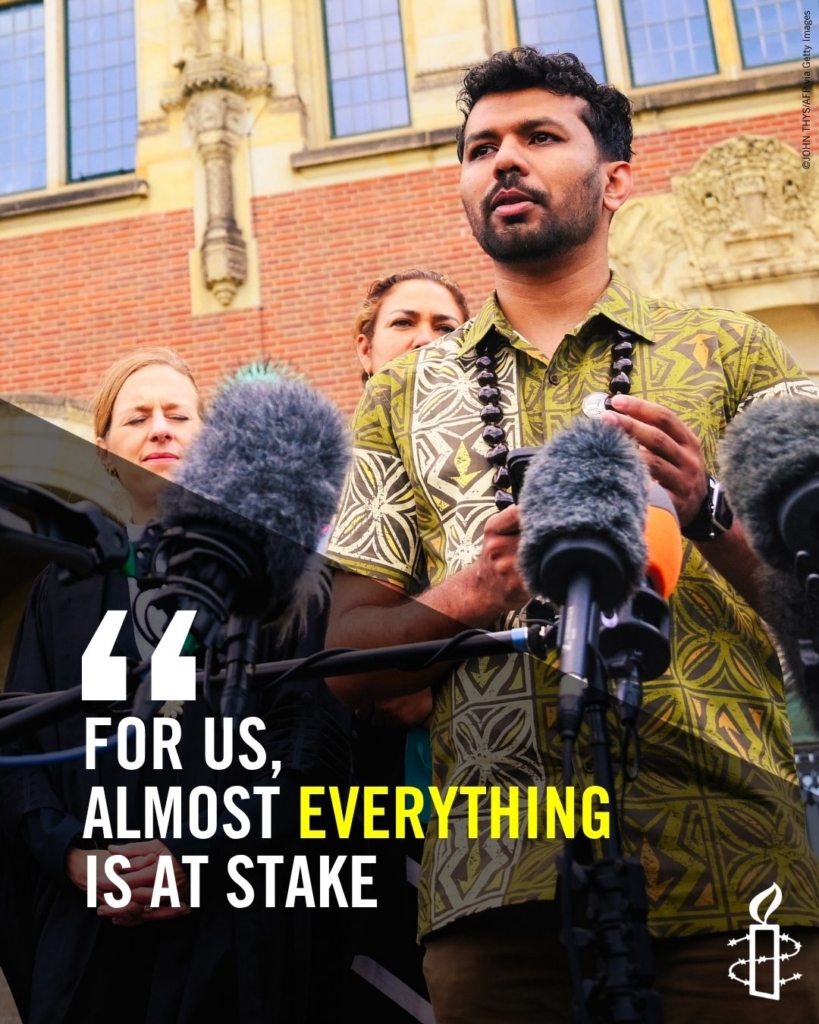
Vishal Prasad, Fiji
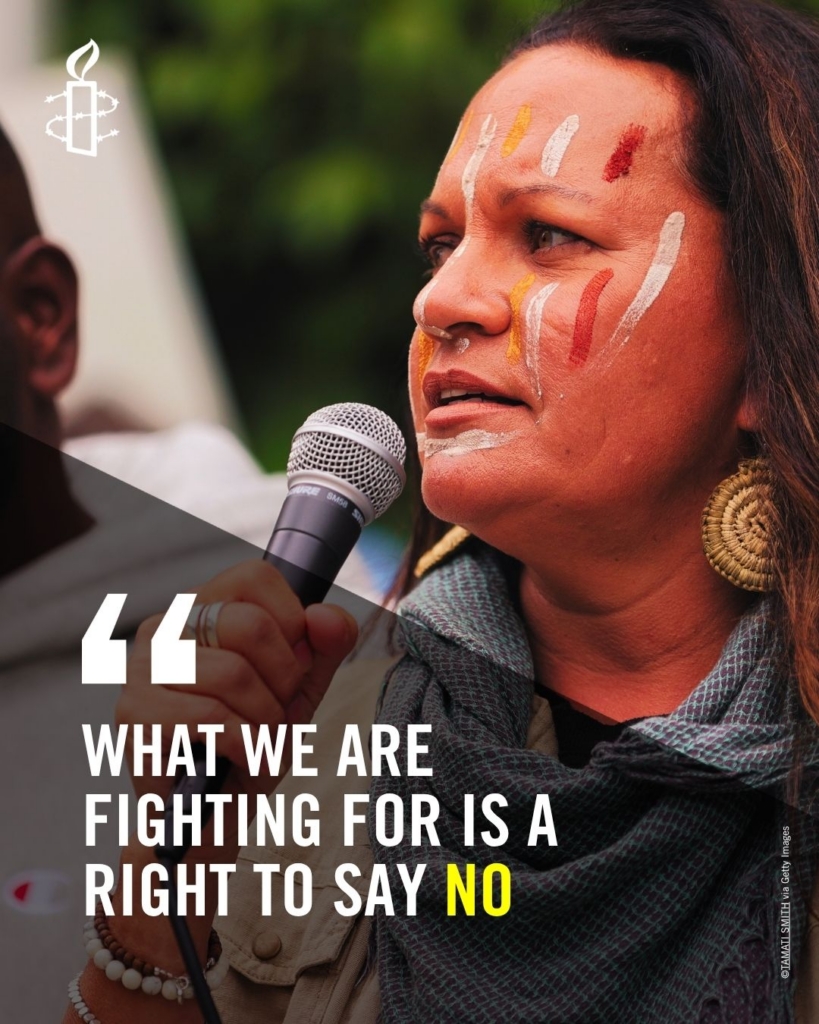
Antonia Burke, Australia
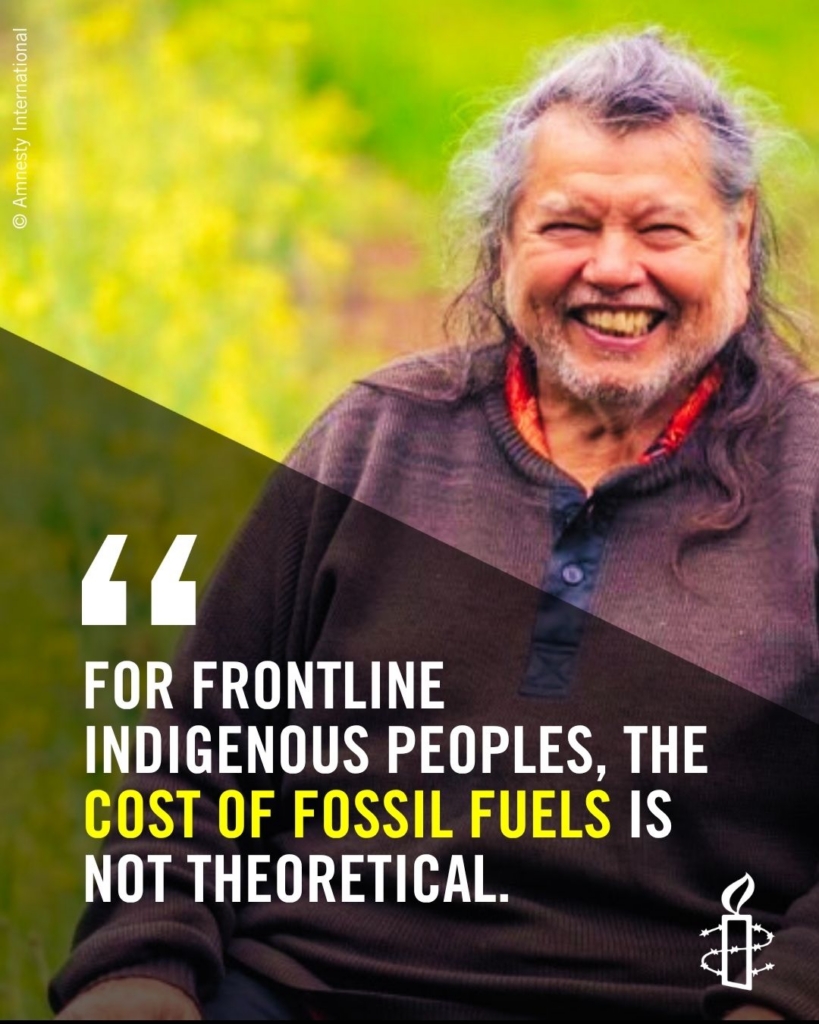
Chief Dsta’hyl, Canada
Knowledge is power
Learn how you can take action against fossil fuels
People around the world are demanding the end of fossil fuels. Frontline communities are resisting and you can join them.